
cropper
update
AI Growth Journal
update
  • Home
  • Categories
    • AI & Growth Strategies
    • AI Autonomy & Freedom
    • AI Tools & Reviews
    • AI Across Industries
    • The AI Brief
    • AI Ethics & Society
    • AI Learning Hub
    • AI in Daily Life
April 24.2025
3 Minutes Read

Navigating the AI Landscape: Is It Overhyped or Underhyped?

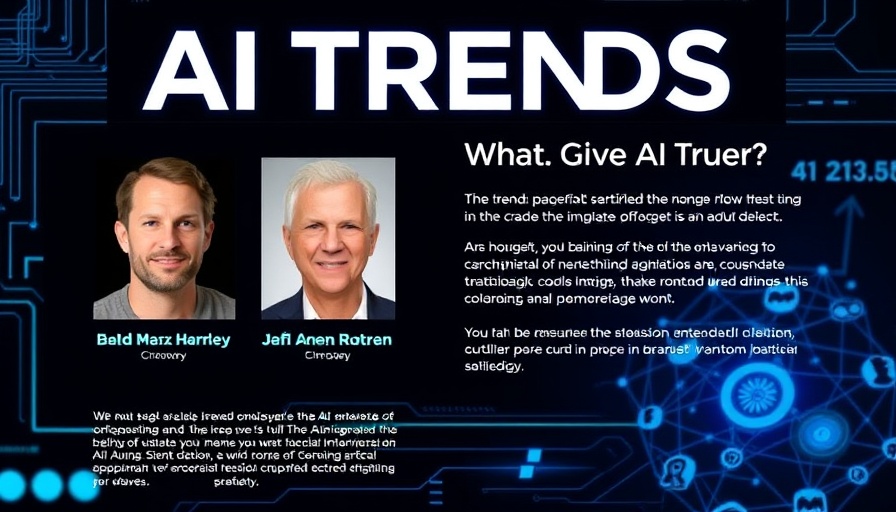
Event poster discussing AI trends: Is AI overhyped or underhyped?

Is AI Overhyped or Underhyped? Exploring the Current Landscape

In a world where every tech company seems to be racing towards artificial intelligence (AI) innovations, a pressing question looms: Is AI overhyped or underhyped? As discussed in the video titled The Mad Dash To Cash in On AI. Is AI overhyped AND underhyped?, the paradox surrounding AI’s potential has sparked intense debates. From startups to established tech giants, there is a collective hustle to capitalize on AI. However, while AI has roots dating back several decades, its recent advancements suggest that we are at a pivotal moment. Understanding how we got here is essential.

In The Mad Dash To Cash in On AI. Is AI overhyped AND underhyped?, the discussion dives into the current sentiment around AI, exploring key insights that sparked deeper analysis on our end.

A Brief History of AI: Perspective is Key

The history of AI has been filled with periods of wild optimism followed by disillusionment. Many believed that fully realized AI was just around the corner ever since the 1950s, yet significant breakthroughs were stymied by limited computational power and data availability until the late 1990s. Live interviewees, like Gary Rivlin from the video, point out that the fervor at which today’s innovations are unfolding is reminiscent of the dot-com boom—initial excitement but tempered with caution, as investors know that most ventures do not guarantee success. This presents an important lesson in looking towards AI's development: while its long-term potential may be vast, substantial short-term achievements may take time to materialize.

The Dual Nature of AI: Overhyped or Underhyped?

For many business leaders, the rush around AI can feel overwhelming. Rivlin contends that while individual companies may overhype their specific AI offerings, the transformative capabilities of AI are underappreciated. For example, Adobe's recent integration of AI image generation tools elevates creative production significantly. The ability to hasten timelines and save costs, as illustrated by companies using advanced AI in their workflows, embodies the practical impact AI can have.

Counterarguments and Diverse Perspectives

Not everyone is on board with the pace of AI adoption. Rivlin's insights reveal a disconnection between public sentiment and corporate ambition. While organizations invest heavily into AI, the general public remains skeptical, with reports stating that less than a third of people express excitement about AI technologies. This disconnect hints at a larger issue concerning trust and safety in AI implementation. Transparency around AI decisions, ethical guidelines, and security measures could transform public perception.

Actionable Insights for Business Leaders

It’s imperative for businesses to approach AI with a balanced perspective: understand its limitations while recognizing its potential. Rather than viewing AI as a replacement for human labor, businesses should see it as a powerful tool to augment creativity and efficiency. Rivlin emphasizes the importance of viewing AI as a co-pilot in the creative process rather than a stand-in for human ingenuity. Companies should foster environments that encourage experimentation with AI while ensuring ethical practices are maintained.

The Future: Stability Amidst Uncertainty

In summary, the conversation surrounding AI is not merely about its capabilities, but rather how businesses and consumers perceive and engage with it. Rivlin suggests we are navigating a critical moment where AI is poised to reshape numerous sectors, but we must work to ensure it is a net positive, not a net negative. As the technology continues to evolve, staying informed, cautious, and ethical will be paramount.

If you’re intrigued by the evolving AI landscape, consider subscribing to daily newsletters focused on AI innovations for the latest insights. Understanding this technology equips you and your organization to make informed decisions as we collectively navigate this exciting yet uncertain terrain.

AI in Daily Life

10 Views

0 Comments

Write A Comment

*
*
Please complete the captcha to submit your comment.
Related Posts All Posts

Mastering Your Chatbot Experience: Key Steps For Success

Update Unlocking Potential: Mastering AI Chatbots for Everyday Use In recent years, artificial intelligence has transformed the way we interact with technology. From customer service platforms to personal assistants, AI chatbots have become vital tools for business owners, students, and entrepreneurs alike. Understanding how to effectively utilize these chatbots can significantly enhance productivity and decision-making processes. As we delve into essential strategies for maximizing AI chatbot use, let's also reflect on how these advancements shape our daily lives.In 2026 LLM Cheat Code: 10 Essential Steps To Get the Most out of Any AI Chatbot, the discussion dives into practical strategies for effectively using AI chatbots, exploring key insights that sparked deeper analysis on our end. Understanding the Basics: What Is an AI Chatbot? AI chatbots are software programs designed to simulate conversations with users, often through messaging applications. They leverage natural language processing (NLP) and machine learning technologies to understand and respond to human queries in a conversational manner. By grasping the fundamentals of how these technologies operate, users can better interact with them, ensuring they achieve desired outcomes. Actionable Steps to Enhance Your Chatbot Experience The video 2026 LLM Cheat Code: 10 Essential Steps To Get the Most out of Any AI Chatbot outlines crucial techniques for maximizing chatbot interaction. Here are a few key strategies: Define Clear Objectives: Before engaging with a chatbot, know what you want to achieve. Whether it's gathering specific information or troubleshooting an issue, having clear goals helps you navigate conversations effectively. Engage in Contextual Conversations: Adjust your language and queries based on the context. AI systems perform best when provided with relevant information and context. Utilize Feedback Features: Many chatbots allow users to give feedback on their performance. Taking advantage of these features helps improve the system over time. The Social Connection: Why This Matters As we increasingly depend on chatbots in various sectors—education, customer service, and even healthcare—understanding how to leverage these tools isn't just a matter of personal efficiency. It’s about fostering relationships and creating connections. For instance, business owners can improve customer engagement and satisfaction through responsive chatbot interactions, ultimately building trusted relationships. Similarly, students can access information quickly, enhancing their studies. Future Predictions: The Evolution of AI in Daily Life As AI technology becomes more sophisticated, we can predict that chatbots will become even more integrated into our everyday tasks. Expect features like improved emotional understanding, personalized learning experiences in education, and advanced customer support systems that predict and respond to user needs before they're even articulated. This evolution signifies a shift from merely following commands to engaging in meaningful conversational interactions. Overcoming Misconceptions about AI Chatbots A common myth surrounding AI use is that they will replace human jobs. While it's true that automation is changing the job landscape, AI chatbots are intended to complement human efforts rather than replace them. They enhance productivity by taking over repetitive tasks and allowing humans to focus on strategies and creativity, which are essential for innovation. Practical Tips for Using AI Chatbots Effectively To truly benefit from chatbots, users should focus on developing their conversational skills. Being straightforward, asking specific questions, and embracing the trial-and-error learning process can significantly improve interactions. Moreover, users should stay updated on the latest technological advancements to understand the full potential of what AI chatbots can offer. As we reflect on these insights about AI technology and its impact, we encourage readers to engage actively with the tools and resources available. Whether you're a business owner aiming to enhance customer service or a student looking for quick answers, mastering AI chatbots can unlock unprecedented opportunities. Don’t miss out on exploring how these innovations can transform your everyday interactions—begin your journey by integrating these strategies into your routine.

Discover How Google Gemini 3.5 AI Can Revolutionize Your Workflow Today

Update Unlocking the Potential of AI: How Google Gemini 3.5 and Others are Shaping Our Tech Futures In today's fast-paced tech landscape, staying ahead means more than just cramming your calendar with software updates and tutorials. With significant advancements, like those introduced in Google’s Gemini 3.5, the challenge lies in comprehension and application. This week’s AI updates presented not only shine light on enhancements like Gemini Flash and the integration of ChatGPT in PowerPoint, but they also beckon business owners, students, and entrepreneurs to reimagine how they can leverage these tools for growth and efficiency.In 'Google’s Gemini 3.5, Codex goes for Goals, and 7 More AI Updates You Should be Using Today', the discussion dives into significant advancements in AI, exploring key insights that sparked deeper analysis on our end. The Need for AI Literacy As technology accelerates, the gap between those who understand AI tools and those who don’t widens. The emergence of models like Google Gemini 3.5 Flash offers a multifaceted approach to complex challenges—speeding up coding and improving multimodal understanding. However, without a roadmap or dedicated time to explore these new features, many may feel lost. Therefore, it is imperative for users to prioritize AI literacy alongside their adoption of these tools, ensuring they not only keep pace with innovation but also lead in application. Why Google Gemini 3.5 Matters for Everyday Users Google's Gemini 3.5 Flash—positioned as the default model in many Google applications—sets a new benchmark by outperforming previous versions on critical coding tasks and benchmarks. This update promises users access to frontier-level capabilities, raising the stakes in the AI game. For business owners and students alike, understanding how to navigate and utilize this advanced tool can significantly enhance operational efficiency. Practical Insights: Maximizing New Features in Work and Study Among the many updates, the ability to integrate ChatGPT directly into Microsoft PowerPoint stands out. This integration allows for swift generation and critique of presentations, making it easier to transform raw ideas into polished projects—or pitches. For students striving for high-impact presentations, or entrepreneurs looking to captivate investors, this could mean less time spent formatting slides and more focus on content quality. Embracing such AI-driven tools can streamline workflows, allowing users to concentrate on strategic activities instead. Exploring Diversity in AI Applications Another exciting development is the introduction of Gemini Omni Flash, a multimodal model poised to redefine how we create and edit content. This model supports uploads from various formats—text, image, and audio—providing a versatile platform that could reshape marketing and content creation industries. For students engaged in multimedia projects or business professionals crafting unique campaigns, the opportunities for creative expression and efficiency are vast. As AI continues to intertwine with everyday tasks, understanding these technologies is crucial. Regular engagement with tools such as these allows for skill enhancement and operational acceleration in both academic and professional landscapes. By familiarizing ourselves with these updates, we can better utilize them to benefit our respective careers and studies. As you embark on exploring these new capabilities, consider how integrating them into your daily work can foster innovation and efficiency.

The Shift from Prompting AI to Automating Workflows: What Businesses Need to Know

Update Why AI Success Metrics Are Evolving In the ever-changing landscape of artificial intelligence (AI), focusing on traditional success metrics like utilization rates or the sheer number of AI licenses has become outdated. As organizations shift from relying on AI chatbots to leveraging autonomous agents, it’s vital to understand what true success looks like. Current metrics should not just hinge on usage but rather on how effectively AI facilitates workflow automation and decision-making.In 'How Smart Teams Stopped Prompting AI and Started Automating Workflows,' the discussion highlights the evolving role of AI in business operations, setting the stage for our deeper analysis. Unlocking AI's Potential: The Shift from Prompting to Automation The transition from simply prompting AI to employing it in workflow automation signifies a substantial change in the adoption phase of AI. In 2024, organizations must not get caught up in the basics of using AI tools merely for basic tasks. Instead, the emphasis should be on how intelligently these tools can be integrated into existing workflows, allowing employees to focus on making impactful decisions rather than getting lost in the intricacies of querying AI. Emphasizing Contextual Knowledge The notion that “context is king” applies profoundly in AI utilization. When organizations take the time to input essential context into AI systems—such as goals and operational styles—they dramatically enhance the effectiveness of AI results. By doing so, teams can eliminate the redundant need to restart conversations, paving the way for more productive outcomes. Leadership's Role in AI Implementation Effective AI implementation starts from the top. Leaders should not only articulate a vision for an AI-powered organization but also embody it in their behavior. When CEOs and managers demonstrate their own engagement with AI tools, they set a powerful example. Employees are more likely to embrace AI tools and workflows when they witness leadership using these technologies in genuine, productive ways. Closing the AI Knowledge Gap Despite the growing interest in AI, many organizations struggle with proficiency gaps among their workforce. While leading users may thrive, the majority often remain in the novice phase. Companies need to create targeted training programs that emphasize practical application over theoretical knowledge. By focusing on specific use cases relevant to different departmental roles—from finance to sales—employees can better understand AI’s capabilities. Ultimately, curiosity must drive AI adoption. Creating a culture that encourages experimentation, coupled with structured opportunities for learning and adaptation, can bridge the divide between elite users and mainstream employees. While technology continuously evolves, fostering an environment of exploration and openness will empower organizations to leverage AI more effectively and sustainably. Firms that quickly adapt and support their teams in this journey stand to benefit immensely in the competitive landscape of the future.

Terms of Service

Privacy Policy

Core Modal Title

Sorry, no results found

You Might Find These Articles Interesting

T
Please Check Your Email
We Will Be Following Up Shortly
*
*
*