
cropper
update
AI Growth Journal
update
  • Home
  • Categories
    • AI & Growth Strategies
    • AI Autonomy & Freedom
    • AI Tools & Reviews
    • AI Across Industries
    • The AI Brief
    • AI Ethics & Society
    • AI Learning Hub
    • AI in Daily Life
April 20.2025
3 Minutes Read

OpenAI and Google’s AI Innovations: What Business Owners and Students Need to Know

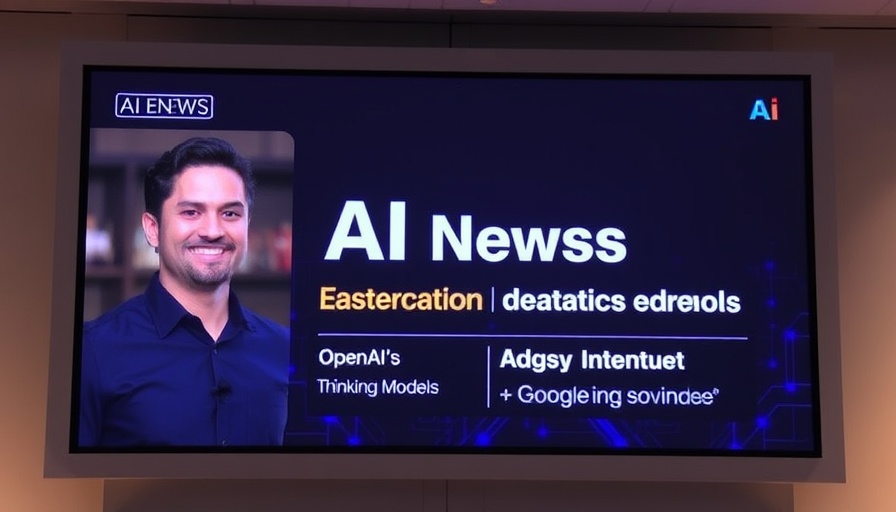
OpenAI Google AI Innovations news announcement slide with presenter.

The Future is Now: OpenAI and Google's Innovative Steps

In recent advancements, OpenAI has unveiled impressive new thinking models that push the boundaries of artificial intelligence. Meanwhile, Google is making waves by offering free access to its Gemini AI tool to millions of users. These developments signal a transformative era for businesses, students, and entrepreneurs who are looking to leverage technology for greater efficiencies and innovative solutions.

In 'OpenAI’s impressive new thinking models, Google gives free Gemini to millions and more', we delve into the innovations in AI technology and their impact on various sectors, inspiring a closer look at their applications.

Understanding the Implications of New AI Tools

The integration of advanced AI tools like OpenAI’s models and Google’s Gemini into daily routines has significant implications. Business owners can harness these technologies to streamline operations, enhance customer interactions, and foster deeper engagement with their audiences. For students, the access to sophisticated learning tools can assist in personalized education and research, transforming the learning experience altogether.

Building a Competitive Edge with Technology

For entrepreneurs in particular, these advancements are more than just cool gadgets; they are crucial instruments for competition. The potential to utilize AI for data analysis, content creation, and market prediction can dramatically alter a business landscape. As tools like Gemini become widely available, the playing field of innovation becomes more egalitarian, allowing startups and established firms alike to benefit from the same capabilities.

Real-Life Applications: How AI is Changing the Game

Consider a small business owner who uses OpenAI’s latest models for customer service automation. This technology not only saves time but also provides a more personalized experience for customers, which can lead to increased loyalty and sales. Similarly, students can employ AI for projects, enabling them to analyze vast amounts of information quickly and effectively, which is essential in an academic environment rife with information overload.

Future Predictions: AI Tools Shaping Tomorrow

As we look forward, the integration of AI in our daily lives will continue to expand. Businesses will increasingly adopt these technologies to not only enhance their services but also address ethical considerations surrounding AI usage—ensuring that privacy and user rights remain protected. The human experience will be central to this evolution, as companies strive to maintain an ethical approach in their advancements.

Taking Action: How to Stay Ahead in the AI Race

Staying informed about new advancements like those from OpenAI and Google is crucial. Business owners, students, and entrepreneurs should seek out training and workshops to familiarize themselves with these emerging tools. Additionally, engaging in communities that discuss AI trends can provide valuable insights into practical applications and ethical considerations, fostering a culture of innovation and responsibility.

Wrap-Up: The Importance of Embracing Change

In conclusion, the developments brought forth by OpenAI’s new thinking models and Google’s Gemini tool showcase a pivotal moment in the landscape of artificial intelligence. As these tools become more integrated into daily life, understanding and utilizing them will be key for personal and professional advancement. As we embrace these changes, let’s strive to remain conscious of the human impact in our technological journey.

AI in Daily Life

12 Views

0 Comments

Write A Comment

*
*
Please complete the captcha to submit your comment.
Related Posts All Posts

Discover How Google Gemini 3.5 AI Can Revolutionize Your Workflow Today

Update Unlocking the Potential of AI: How Google Gemini 3.5 and Others are Shaping Our Tech Futures In today's fast-paced tech landscape, staying ahead means more than just cramming your calendar with software updates and tutorials. With significant advancements, like those introduced in Google’s Gemini 3.5, the challenge lies in comprehension and application. This week’s AI updates presented not only shine light on enhancements like Gemini Flash and the integration of ChatGPT in PowerPoint, but they also beckon business owners, students, and entrepreneurs to reimagine how they can leverage these tools for growth and efficiency.In 'Google’s Gemini 3.5, Codex goes for Goals, and 7 More AI Updates You Should be Using Today', the discussion dives into significant advancements in AI, exploring key insights that sparked deeper analysis on our end. The Need for AI Literacy As technology accelerates, the gap between those who understand AI tools and those who don’t widens. The emergence of models like Google Gemini 3.5 Flash offers a multifaceted approach to complex challenges—speeding up coding and improving multimodal understanding. However, without a roadmap or dedicated time to explore these new features, many may feel lost. Therefore, it is imperative for users to prioritize AI literacy alongside their adoption of these tools, ensuring they not only keep pace with innovation but also lead in application. Why Google Gemini 3.5 Matters for Everyday Users Google's Gemini 3.5 Flash—positioned as the default model in many Google applications—sets a new benchmark by outperforming previous versions on critical coding tasks and benchmarks. This update promises users access to frontier-level capabilities, raising the stakes in the AI game. For business owners and students alike, understanding how to navigate and utilize this advanced tool can significantly enhance operational efficiency. Practical Insights: Maximizing New Features in Work and Study Among the many updates, the ability to integrate ChatGPT directly into Microsoft PowerPoint stands out. This integration allows for swift generation and critique of presentations, making it easier to transform raw ideas into polished projects—or pitches. For students striving for high-impact presentations, or entrepreneurs looking to captivate investors, this could mean less time spent formatting slides and more focus on content quality. Embracing such AI-driven tools can streamline workflows, allowing users to concentrate on strategic activities instead. Exploring Diversity in AI Applications Another exciting development is the introduction of Gemini Omni Flash, a multimodal model poised to redefine how we create and edit content. This model supports uploads from various formats—text, image, and audio—providing a versatile platform that could reshape marketing and content creation industries. For students engaged in multimedia projects or business professionals crafting unique campaigns, the opportunities for creative expression and efficiency are vast. As AI continues to intertwine with everyday tasks, understanding these technologies is crucial. Regular engagement with tools such as these allows for skill enhancement and operational acceleration in both academic and professional landscapes. By familiarizing ourselves with these updates, we can better utilize them to benefit our respective careers and studies. As you embark on exploring these new capabilities, consider how integrating them into your daily work can foster innovation and efficiency.

The Shift from Prompting AI to Automating Workflows: What Businesses Need to Know

Update Why AI Success Metrics Are Evolving In the ever-changing landscape of artificial intelligence (AI), focusing on traditional success metrics like utilization rates or the sheer number of AI licenses has become outdated. As organizations shift from relying on AI chatbots to leveraging autonomous agents, it’s vital to understand what true success looks like. Current metrics should not just hinge on usage but rather on how effectively AI facilitates workflow automation and decision-making.In 'How Smart Teams Stopped Prompting AI and Started Automating Workflows,' the discussion highlights the evolving role of AI in business operations, setting the stage for our deeper analysis. Unlocking AI's Potential: The Shift from Prompting to Automation The transition from simply prompting AI to employing it in workflow automation signifies a substantial change in the adoption phase of AI. In 2024, organizations must not get caught up in the basics of using AI tools merely for basic tasks. Instead, the emphasis should be on how intelligently these tools can be integrated into existing workflows, allowing employees to focus on making impactful decisions rather than getting lost in the intricacies of querying AI. Emphasizing Contextual Knowledge The notion that “context is king” applies profoundly in AI utilization. When organizations take the time to input essential context into AI systems—such as goals and operational styles—they dramatically enhance the effectiveness of AI results. By doing so, teams can eliminate the redundant need to restart conversations, paving the way for more productive outcomes. Leadership's Role in AI Implementation Effective AI implementation starts from the top. Leaders should not only articulate a vision for an AI-powered organization but also embody it in their behavior. When CEOs and managers demonstrate their own engagement with AI tools, they set a powerful example. Employees are more likely to embrace AI tools and workflows when they witness leadership using these technologies in genuine, productive ways. Closing the AI Knowledge Gap Despite the growing interest in AI, many organizations struggle with proficiency gaps among their workforce. While leading users may thrive, the majority often remain in the novice phase. Companies need to create targeted training programs that emphasize practical application over theoretical knowledge. By focusing on specific use cases relevant to different departmental roles—from finance to sales—employees can better understand AI’s capabilities. Ultimately, curiosity must drive AI adoption. Creating a culture that encourages experimentation, coupled with structured opportunities for learning and adaptation, can bridge the divide between elite users and mainstream employees. While technology continuously evolves, fostering an environment of exploration and openness will empower organizations to leverage AI more effectively and sustainably. Firms that quickly adapt and support their teams in this journey stand to benefit immensely in the competitive landscape of the future.

Navigating AI Strategies: Build, Buy, Partner, or Wait for 2026?

Update Deciphering the Future: The 4-Layer AI Stack Decision Framework In a rapidly changing world, the decision on how to approach artificial intelligence (AI)—whether to build, buy, partner, or wait—has never been more critical. This framework helps organizations assess their options in a practical and structured manner, particularly as AI technologies continue to advance and integrate into various sectors.In 'Build, Buy, Partner, or Wait: The 4-Layer AI Stack Decision Framework for 2026', the discussion dives into effective strategies for adopting AI, exploring key insights that sparked deeper analysis on our end. Understanding the AI Stack: What Are Our Options? The four layers serve as a guide to navigating the complex world of AI implementations: Build: This option favors businesses that have the technical capability and resources to develop proprietary AI solutions, maximizing control and customization. Buy: Companies with limited time or technical expertise can acquire ready-made AI solutions from established providers, enabling speedy implementation. Partner: Strategic partnerships with AI innovators can bolster a company’s capabilities without the high costs of development or purchasing. Wait: With rapid advancements, sometimes a waiting strategy allows businesses to witness trends and technologies mature before committing significant investments. Why This Matters to Business Owners and Entrepreneurs The implications of the AI stack framework can be profound. For business owners and entrepreneurs, understanding these choices can dictate not just effectiveness but also competitiveness in their respective markets. With the right decision, a small business can leverage AI to enhance customer experiences, streamline operations, or derive actionable insights from big data. Real-World Applications: Learning from Others For instance, a small e-commerce retailer faced the dilemma of whether to build or buy a customer service AI chatbot. Ultimately, the retailer decided to buy an off-the-shelf solution, learning from the market's best practices, resulting in improved customer satisfaction while saving crucial development time. This real-world decision showcases how leveraging existing solutions can allow businesses to focus on core competencies rather than getting sidetracked by technology. Future Predictions: The Evolution of AI Decisions As we step towards 2026, it’s essential to consider how the AI landscape will continue to evolve. With the maturation of AI technologies, options like partnerships and strategic collaborations will likely gain prominence, allowing companies to benefit from shared resources and expertise. Additionally, emerging trends may reshape the notion of waiting for technology to develop—those who lag may find themselves left behind.Overall, businesses that adopt agile decision-making frameworks will fair better in the fast-paced world of AI. A Call for Collective Understanding The decision framework presented here applies not just to corporate giants but also to startups and small businesses. As we navigate the future, understanding how to approach AI—whether through building systems, buying technology, or seeking partnerships—positions us for growth and innovation. It’s not merely a question of technology but how different minds can harness it responsibly and effectively for the greater good.

Terms of Service

Privacy Policy

Core Modal Title

Sorry, no results found

You Might Find These Articles Interesting

T
Please Check Your Email
We Will Be Following Up Shortly
*
*
*