
cropper
update
AI Growth Journal
update
  • Home
  • Categories
    • AI & Growth Strategies
    • AI Autonomy & Freedom
    • AI Tools & Reviews
    • AI Across Industries
    • The AI Brief
    • AI Ethics & Society
    • AI Learning Hub
    • AI in Daily Life
November 16.2026
3 Minutes Read

Understanding AI's Learning Path: Better Than Yesterday

Musicians in virtual jam session showing teamwork; AI Can Do Everything…Except This

AI’s Limitations: Exploring the Journey of Learning

In a world increasingly dominated by artificial intelligence, it’s easy to forget the imperfections that accompany the learning journey, not just of humans but of technology itself. The thought-provoking video titled AI Can Do Everything…Except This intricately weaves a narrative about fallen paths, learning through mistakes, and the persistent human spirit—a reflection that resonates deeply in the era of rapid technological advancement.

In AI Can Do Everything…Except This, the discussion dives into the learning process of AI, exploring key insights that inspired a deeper analysis on our end.

The Human Experience in Technology

The lyrics of the accompanying song illustrate the essence of struggle and resilience. The line, “I fall down hill but somehow I learn,” embodies the challenges faced not only by humans but also by AI systems in their evolution. As we delve into technology's capabilities, we must acknowledge that like us, AI learns through trial and error, though it lacks the emotional depth and conscious awareness inherent in human learning.

From Error to Understanding: The Process of AI Learning

Artificial intelligence thrives on data; it assesses vast amounts and deduces information from patterns. However, humans approach learning with emotions and consciousness that influence decision-making. AI can optimize data-driven decisions but cannot comprehend failure on an emotional level. The complexity of emotional intelligence is a landscape AI cannot traverse, no matter how advanced it becomes. This distinction plays a crucial role for business owners and educators who rely on AI tools for everyday operations and lesson planning.

The Value of Mistakes in Learning

Every mistake leaves a mark, be it on a human mind or an AI’s algorithmic pathway. The process of refining artificial intelligence is fraught with testing and adjustments, mirroring human experiences. For students, the lesson here is multi-faceted—embracing failure as a stepping stone to improvement is paramount. “Not perfect, just better than yesterday,” reminds us to celebrate incremental growth over unattainable perfection. In educational contexts, this mindset fosters a healthier attitude toward assessment and progress.

AI's Influence on Everyday Life

For tech enthusiasts and business owners, understanding the strengths and limitations of AI reshapes expectations and workflows. Incorporating AI should enhance productivity, simplifying tasks to allow human potential to shine elsewhere. Such tools, while innovative, should not overshadow the essence of human thought and creativity. For instance, smart assistants can automate mundane activities; however, they cannot replace the nuanced decision-making found in strategic business discussions.

Future Insights: What Lies Ahead for AI?

As AI technology continues to unfold, anticipating future capabilities while acknowledging current boundaries is crucial. The phrase “I’m not done” echoes throughout the learning process, reminding both humans and AI developers that growth is ongoing. Collaborative engagements between technology and human ingenuity are likely to yield remarkable advancements. Business owners and educators must remain vigilant, leading the way in balancing productivity with personal engagement, ensuring that innovation serves a purpose beyond mere efficiency.

Just as the video poignantly concludes, “I live,” it serves as a powerful reminder that both humans and AI must embrace their learning cycles. Embracing imperfections can pave a stronger path toward future endeavors.

Incorporating AI tools into your operations is only the first step. To fully leverage the potential of technology, proactive engagement and continuous learning are essential. Move closer to refining your strategies—let’s champion the journey of progress together!


AI Learning Hub

1 Views

0 Comments

Write A Comment

*
*
Please complete the captcha to submit your comment.
Related Posts All Posts

Is Software Over? Exploring AI's Impact on Software Development

Update AI's Revolutionary Impact: Is Software Actually Over? The notion that "software is over" has become a hot topic among tech enthusiasts and professionals alike, igniting debates over the future of software development in the age of artificial intelligence. The rise of advanced AI tools capable of reverse engineering existing software and applications poses significant questions—does this mean we are stepping into a future where traditional software development becomes obsolete?In 'Is Software Over?', the video dives into the fascinating intersection of artificial intelligence and software development, prompting a deeper analysis of its implications. The Power of AI in Software Reconstruction Recent advancements in AI technology allow these systems to analyze compiled code effectively, creating new programs from existing software by mimicking functionality based solely on behavior. Imagine a powerful AI tool that, after observing a video game, can recreate a playable version online—a statement that was once the stuff of science fiction. The implications of such technology extend far beyond gaming; they touch on various fields, including graphics and design tools like Adobe's suite. Legal Ramifications: What's Allowed? As we delve deeper into this conversation, the question of legality surfaces. While some aspects of software functionality may not be explicitly protected by copyright, complex elements such as models, textures, and recognizable game characters still are. This juxtaposition invites budding engineers to explore reverse-engineering—regaining the lost source code in a way that sparks innovation but also raises ethical discussions. Transformational Research Findings in AI Research highlighting AI's ability to reconstruct entire software projects from compiled code demonstrates impressive progress. Initially, AI struggled with a mere 15% reconstruction accuracy, but within nine months, this surged to nearly 100%. Such transformations highlight the vast potential AI holds for finding solutions in software engineering, whereas traditional methodologies may lag behind. With advanced models showing increasingly effective results, future applications seem not only promising but inevitable. Future Trends: Personalized Software? Looking ahead, the possibilities of personalized software seem boundless. Custom-tailored applications that meet individual user needs could emerge, allowing creators to build versions of software that align precisely with their artistic or professional visions. However, as tech consumers, we must consider the practicality of these innovations—does working with unique programs mean sacrificing employment opportunities in established software environments, such as graphic design and video editing? Challenges Ahead: Who Will Control AI? While the advances in AI are exciting, they also come with potential challenges. Tech companies are beginning to impose restrictions, regulating AI's ability to recreate existing programs. Instances of developers encountering limitations when trying to engage in legitimate reverse engineering raise concerns over the control corporations may exert on this emerging technology. As AI capabilities grow, ensuring freedom in its applications becomes crucial. Conclusion: A Time of Opportunity and Exploration In a rapidly evolving technological landscape, declaring "software is over" appears alarming but not fully accurate. The realm of software development is not disappearing; it is, rather, transforming under the influence of artificial intelligence. With the ability to create personalized software, the future is ripe for innovation and opportunity. Now, more than ever, it is essential to stay informed about technological advancements and their implications. Explore tools and platforms that enable you to harness the power of AI and develop your projects for a future where technology is genuinely tailored to your needs.

Unveiling OpenAI's Astra: Transforming Our Understanding of AI

Update Unlocking the Mysteries of AI with Astra: What You Need to Know The recent discussion surrounding OpenAI's Astra has introduced a new frontier in artificial intelligence, a field that continues to evolve rapidly. This groundbreaking tool promises to offer insights into the inner workings of AI systems, potentially revolutionizing how developers understand and improve upon existing models. As businesses, students, and tech enthusiasts explore this new capability, it raises significant questions about AI’s practical applications and its future trajectory.In 'OpenAI's Astra Just Opened The Black Box Of AI', the discussion dives into Astra's revolutionary capabilities, exploring key insights that sparked deeper analysis on our end. A New Era of Understanding AI Astra's ability to analyze and edit neural networks marks a pivotal moment in AI research. Previous attempts to make sense of the intricate layers of neural networks often felt like navigating a labyrinth without a map. With Astra, researchers can uncover what games an AI is trained on and even diagnose its performance issues. Just like a skilled mechanic diagnosing engine problems, Astra effectively can sift through the complex mass of data that constitutes an AI's 'brain.' For instance, Astra connected the dots with simple games like Pong, revealing the educational capabilities hidden within seemingly random numbers. Not Just a Quick Fix: The Possibilities and Limitations of Astra Though Astra can enhance an AI model's performance by correcting its neural pathways, it’s crucial to recognize its limitations. It acts like a mechanic that can fix a car but can’t teach driver skills. The reports often suggest that Astra enhances AI math capabilities, but the reality is more nuanced. It identifies and mitigates cognitive loops within algorithms, enabling smoother problem-solving processes. However, realizing that these improvements occur in controlled experiments with specific AI systems gives us a more concentrated view of Astra's potential. Empowerment Through Technology: For Businesses and Educators The implications for business owners and educators are exciting. By integrating tools like Astra, companies can optimize decision-making processes, reduce redundant workflows, and enhance customer experiences through more responsive AI systems. For educators, employing these advancements means new teaching methods, potentially tailoring AI to meet diverse learning needs. However, awareness is key—these tools should augment, not replace, fundamental teaching and strategic thinking. Setting Realistic Expectations for AI Advancements The buzz surrounding Astra may lead to inflated expectations. While it can enhance AI properties significantly, it does not promise blanket improvement across all types of AI systems. Stories of Astra failing to enhance models like Gemma 3 illustrate the challenges ahead. This reinforces the idea that each AI has unique characteristics and needs tailored interventions. Understanding this can prevent disappointment and drive more informed expectations of AI capabilities. Considerations for the Future of AI As we embrace tools like Astra, it’s important to maintain a critical perspective on their capabilities and limitations. Astra demonstrates potential, but it also reflects the broader conversation about AI ethics and society. Will we create technology that enhances human experience or creates an over-reliance on automated solutions? Emphasizing an ethical approach in the development of AI tools ensures they serve humanity positively. In conclusion, exploring the intricacies of OpenAI's Astra opens a window into what the future holds for AI research and applications. As we navigate this evolving landscape, understanding the real utility of these advancements will empower us to leverage them effectively. Whether you’re a tech enthusiast, a business owner, or an educator, it’s time to embrace the innovation Astra brings into the field of artificial intelligence.

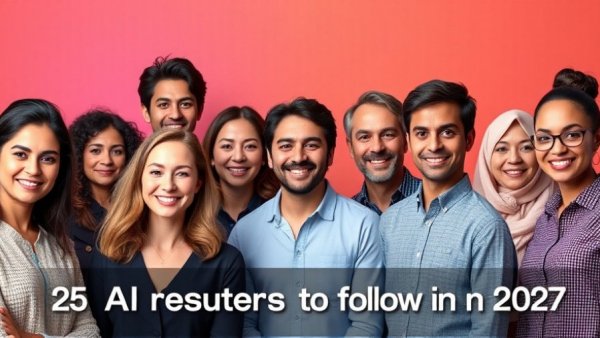
AI Researchers to Follow in 2027: Who Will Shape the Future of Technology?

Update The Trailblazers of AI Research in 2027 As we venture into the future of artificial intelligence, it's essential to identify the thought leaders who will shape the industry in the coming years. With every major launch of AI models, we witness a surge of interest and scrutiny, and the voices of researchers become paramount. By following these pivotal figures, you gain insights into their groundbreaking work and how it influences the AI landscape. Understanding Interpretability: Key Figures to Watch One of the most pressing challenges in AI is understanding how these complex models make decisions. The interpretability revolution has grown substantially, with researchers like Chris Olah, Neel Nanda, and Jacob Steinhardt leading this charge. Olah, an Anthropic co-founder, focuses on making AI's decision-making transparent, which aids in building trust. His work reveals why models may mention seemingly irrelevant details, such as a bridge in a cooking recipe, shedding light on their reasoning processes. Neel Nanda at Google DeepMind champions pragmatic interpretability, striving for practical applications, particularly in safety concerns like detecting deceptive behavior in AI. Meanwhile, Jacob Steinhardt, a dedicated professor at UC Berkeley, advocates open tools for AI oversight, balancing academic insights with hands-on applications, essential for emerging AI regulators. Boosting Efficiency: The Researchers Redefining AI Cost As businesses increasingly depend on AI, managing costs tied to GPU usage becomes critical. The voices of efficiency researchers such as Tri Dao, Albert Gu, and Tim Dettmers are indispensable. Tri Dao, head of the Dao AI Lab, has made waves with the FlashAttention framework, which optimizes how AI processes information, positively influencing operational expenses. Following him is crucial for those in enterprises leveraging AI technology. Alongside him, Albert Gu's innovations in state space models focus on ensuring AI systems remain efficient and adaptable. Lastly, Tim Dettmers distinguishes himself by making AI fine-tuning processes more accessible. His insights into the limitations of physical computing stimulate conversations about future possibilities in achieving artificial general intelligence, making his contributions invaluable in understanding AI’s potential trajectory. The Future of AI: Evolving Dynamics and Community Focus Looking at the 2027 landscape, the intertwining of efficient computation and interpretability will drive AI's development. Simply following researchers isn’t enough; engaging with their findings and discussions will enhance your understanding of this complex field. Both the scientific community and corporate sectors are keenly observing how these individuals influence broader narratives around AI. In conclusion, as the dynamic landscape of AI research unfolds, keep an eye on these prominent figures who are paving the way for future advancements. Their work not only shapes models and frameworks but also impacts the ethical discourse surrounding AI. By engaging with their insights, you will be better equipped to navigate the intriguing yet complex world of artificial intelligence.

cropper
update
WorldPulse News
cropper
update

Write a small description of your business and the core features and benefits of your products.

  • update
  • update
  • update
  • update
  • update
  • update
  • update

COMPANY

  • Privacy Policy
  • Terms of Use
  • Advertise
  • Contact Us
  • Menu 5
  • Menu 6

+13218727566

AVAILABLE FROM 8AM - 5PM

City, State

501 N. Orlando Ave. Ste 313, PMB 183 , Winter Parkk, FL

ABOUT US

Write a small description of your business and the core features and benefits of your products.

© 2026 CompanyName All Rights Reserved. Address . Contact Us . Terms of Service . Privacy Policy

Terms of Service

Privacy Policy

Core Modal Title

Sorry, no results found

You Might Find These Articles Interesting

T
Please Check Your Email
We Will Be Following Up Shortly
*
*
*