


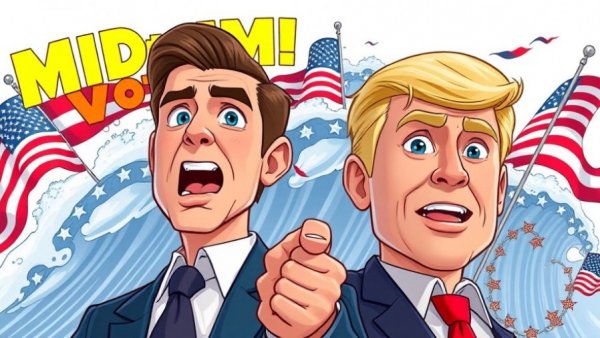
Understanding the Massive Midterm Shift
The recent midterm elections have taken many by surprise, with a decisive blue wave crashing across the political landscape in the United States. Analysts and voters alike were caught off guard as the Democrats claimed victory in 56 seats—an event predicted by AI models but still reflective of a tumultuous political climate. What sparked this sudden shift in voter sentiment, and what does it signify for future elections?
In Best and Worst AI Predictions From The Midterms as Democrats Sweeps, the discussion dives into the surprising election outcomes while exploring AI's predictive power in uncovering voter sentiment trends.
AI's Role in Election Predictions: A Look Back
The AI models employed during the election season showed promise, successfully predicting major outcomes, although not without some notable misses. For example, the AI's projection for Texas was off by a staggering 12 points. However, it managed to capture the essence of sentiment among voters leading to Democrats gaining ground in regions presumed solidly Republican. As we reflect on these analytical outcomes, it becomes essential to explore what these predictions tell us about the voters’ current perspectives.
Key Insights from the Data
One of the most striking insights derived from this election cycle was the AI's overall conservative approach. With predictive capabilities estimating Congress control at 91%—matching market confidence levels—the AI nonetheless demonstrated a tendency to rank lower than the actual outcomes in many races. While somewhat frustrating, this cautious calculation reflects a growing need to evolve AI forecasting models to better understand shifts in political dynamics.
Highlights and Misses: The Best and Worst Predictions
Among the AI's predictions, several notable successes stood out, like accurately forecasting the Florida Governor's contest, where the AI's accuracy exceeded market expectations by a significant margin. Conversely, the predictions for candidates like Bobby Polo in Texas and Aaron Ford in Florida fell flat, showcasing the model's significant gaps in forecasting specific candidate victories amidst a passionate electorate.
What Lies Ahead: Future Predictions and Trends
Looking forward, there is much speculation about what the incoming shifts in governance will entail. With Democrats expanding their influence, conversations about policy changes and party dynamics are inevitable. The potential for dramatic shifts in public policy may create new arenas for AI to explore predictive outcomes, helping to guide business owners in making informed decisions based on evolving market landscapes.
Understanding the Voter Sentiment
The evident shift in voter sentiment — a critical takeaway from the midterms — reinforces the importance of political engagement and public discourse. Many Americans are advocating for change, and this election cycle was not merely about party politics but rather a sign of the times that could be heralding new beginnings for communities across the nation. Voter participation suggests an engaged populace ready to voice their opinions, signaling more than just a shift in seats — it's a demand for new leadership and strategies.
In Best and Worst AI Predictions From The Midterms as Democrats Sweeps, we see both the triumphs and challenges of using AI models as a tool for electoral prediction. This exploration highlights the intricacies of interpreting data in a rapidly changing political environment, revealing the potential avenues for innovation in prediction technologies.
For tech-savvy business owners and AI enthusiasts, understanding these electoral dynamics is vital for leveraging insights into broader trends affecting their industries. Staying ahead of AI advancements will be critical in navigating the upcoming shifts in governance and public sentiment.




Write A Comment