
cropper
update
AI Growth Journal
update
  • Home
  • Categories
    • AI & Growth Strategies
    • AI Autonomy & Freedom
    • AI Tools & Reviews
    • AI Across Industries
    • The AI Brief
    • AI Ethics & Society
    • AI Learning Hub
    • AI in Daily Life
June 07.2025
3 Minutes Read

Why Accuracy and Trust in AI are Crucial for Today’s Businesses

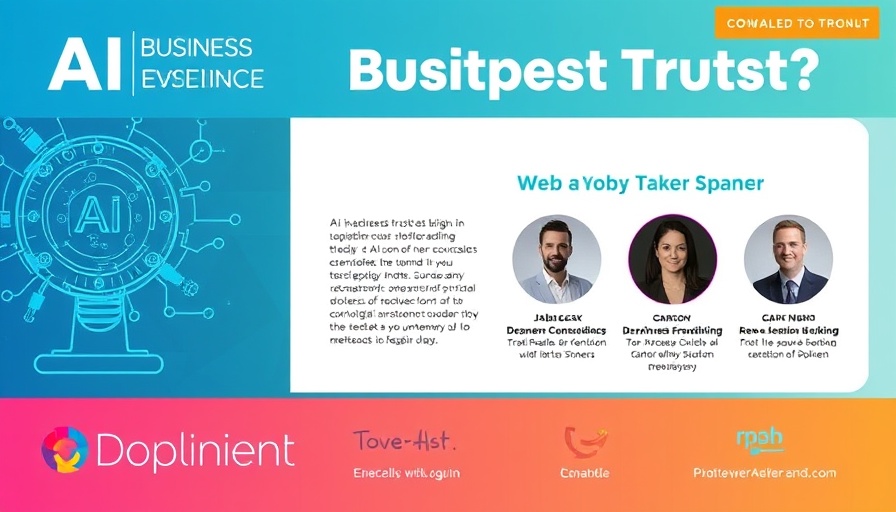
Trust in AI for businesses event banner with speakers Jordan Wilson and Aaron Harris.

Trusting AI: Why Accuracy Matters

In the realm of artificial intelligence (AI), the percentage of accuracy touted by systems isn't just a number—it's a commitment to trust and reliability. Business leaders, particularly those in finance and accounting, often grapple with whether a 90% or 95% accuracy rate is sufficient. For many, the response is clear: in high-stakes situations such as managing finances or generating reports, even a minor error can have disastrous repercussions. This is why the question of trust in AI—especially how to measure and ensure it—has become increasingly prominent, as highlighted in the insightful discussion led by Aaron Harris, CTO of Sage, during the recent Sage Future Conference.

In 'AI & Trust: When 98% accuracy won't cut it and how Sage can fix it,' the discussion dives into the complex relationship between accuracy and trust in AI technology, exploring key insights that sparked deeper analysis on our end.

The Importance of Accurate AI in Finance

When it comes to the financial domain, the repercussions of inaccuracies are severe. A Chief Financial Officer (CFO) relies on trust to maintain credibility with stakeholders, and even a single misreported figure can damage their reputation irrevocably. As Harris adeptly points out, while some industries can afford to roll out algorithms with a certain margin of error, the finance sector must adhere to a higher standard of accuracy. The stakes are elevated, so achieving a foolproof level of performance is crucial for all software companies, especially those like Sage, which focuses on the critical functions of accounting, payroll, and HR.

How Sage Copilot Enhances Accuracy

One of Sage’s groundbreaking advancements, Sage Copilot, leverages advanced AI mechanisms that focus on accuracy and trustworthiness. Unlike typical large language models, which can be prone to errors in mathematical calculations, the technology behind Sage Copilot incorporates specialized algorithms designed specifically for financial tasks. This ensures users are able to close the books significantly faster—reducing the duration from weeks to mere days. At the heart of this efficiency lies a multitude of finely-tuned models that complement each other, providing checks and balances to ensure users can trust the results they receive.

Piloting Towards Trust with Transparency

Building trust also requires transparency with clients. Harris introduced the concept of a "trust label" for Sage Copilot features, akin to a nutrition label, that outlines the systems used, how data is handled, and safeguards in place against bias. Such practices remind users that while AI is a powerful tool, it is also essential to uphold ethical standards and manage expectations. Essentially, this allows businesses to openly evaluate the technology and feel confident in their adoption of AI tools like Sage Copilot.

Looking Ahead: The Future of AI in Business

As the demand for trustworthy AI solutions continues to grow, the conversation must evolve alongside technological advancements. With regulatory frameworks still playing catch-up, it’s imperative for companies to proactively establish practices that prioritize the user’s experience and peace of mind. Sage’s approach of combining advanced AI technology with human oversight is one such promising route. As they work to train their AI models on industry-best practices, the opportunity to enhance trust in AI solutions could pave the way for broader adoption across sectors.

The Bottom Line: Embracing Responsible Innovation

At its core, the continuous conversation around AI and trust hinges on the shared responsibility of both developers and users. It's about fostering a culture of humility, responsibility, and transparency. For the business owners in our audience, this serves as a call-to-action: engaging thoughtfully with AI can yield unparalleled advantages—but doing so requires a commitment to trustworthiness in technology. In this rapidly evolving landscape, staying informed and proactive will not only enhance business procedures but also improve the overall experience for the customers they serve.

As you navigate this complex environment, consider how integrating trustworthy AI solutions can impact your operations positively. The future of finance is being built today, and with the right tools and mindset, there’s immense potential to be unlocked.

AI in Daily Life

17 Views

0 Comments

Write A Comment

*
*
Please complete the captcha to submit your comment.
Related Posts All Posts

Closing the AI Training Gap: 7 Steps to Educate Your Team on LLMs

Update Understanding the AI Training Gap in Organizations In today’s fast-paced business environment, the effective use of artificial intelligence (AI) tools is becoming increasingly important. Yet, a shocking 90% of companies fail to properly train their employees on the usage of these technologies. This lack of training has created a significant divide in corporate America—a gap that could lead to outdated practices for those who remain unaware of how to effectively utilize AI.In Episode 847: How to Train Your Team on AI, the discussion dives into the critical need for organizations to educate their employees on AI utilization, ultimately sparking our deeper analysis on how businesses can implement effective training strategies. The Seven Steps to Successfully Train Your Team on AI For businesses eager to bridge this gap, Jordan Wilson, host of the Everyday AI podcast, proposes a strategic approach that consists of seven defined steps outlined in the Start Here series: Leadership Must Go First: It's crucial for CEOs and top management to utilize AI tools daily rather than merely advocating for their usage. This sets a precedent for the entire organization, fostering an AI-friendly culture. Fix Broken Workflows Before Adding AI: If existing workflows are inefficient, adding AI will likely exacerbate the problem. Organizations must first optimize their processes to leverage AI effectively. Pick One AI Platform and Commit: Rather than spreading resources thin across various AI tools, companies should focus their efforts on mastering one platform, ensuring everyone is using a singular, coherent operating system. Train in Three Layers: Training should be comprehensive, with foundational literacy, domain-specific training for different roles, and a focus on understanding data and procedures. Document Procedures, Not Just Data: An organization's unique knowledge—embedded in the experiences and insights of its employees—must be documented. This knowledge is vital in creating a robust AI implementation strategy. Mandate Hands-On Practice: Organizations should create regular opportunities for employees to engage with AI tools actively. The idea is to transform theoretical knowledge into practical applications that yield measurable outputs. Move from Operator to Orchestrator: Employees should evolve from merely executing tasks to orchestrating AI processes, ensuring the technology aligns with the organization's goals and methods. The Imperative for Action These steps, if implemented carefully, can place companies ahead in the rapidly evolving digital landscape. With 92% of firms planning to increase AI investment yet only 1% describing their deployments as mature, the current training gap could mean the difference between companies that adapt successfully and those that fall behind. Next Steps for Business Owners and Entrepreneurs If you identify with the alarming statistics and want to ensure your company becomes part of the successful tier, consider starting with the free Prime Prompt Polish course, where team members can gain foundational AI knowledge. From there, implement the seven steps of training with an eye on continuous improvement, reflection, and adaptation. As business owners and entrepreneurs, embracing these strategies will not only future-proof your organization but also empower your workforce. In this digital age, the question is not whether to adopt AI but how to enable your team to excel with it. Call to Action Start your journey towards AI mastery today! Sign up for the free Prime Prompt Polish course at starthere.com and take the first steps in transforming your organization into an AI-savvy powerhouse.

AI Hallucinations: Key Insights for Business Owners and Students

Update The Phenomenon of AI Hallucinations: Understanding the Basics In our rapidly evolving technological landscape, artificial intelligence (AI) increasingly influences various aspects of our daily lives. One term that has surfaced in discussions surrounding AI is "AI hallucinations." But what does this mean, and why is it relevant to business owners and entrepreneurs in particular?In Ep 846: AI Hallucinations: What they are, why they happen, and the right way to reduce the risk, the discussion dives into the complexities of AI's impact, exploring key insights that sparked deeper analysis on our end. AI hallucinations occur when artificial intelligence generates outputs that are misleading or entirely fabricated, failing to accurately represent reality. This phenomenon can be attributed to the way AI systems are trained, often relying on vast datasets that contain inaccuracies or biases. For example, a chatbot designed to assist users may produce incorrect answers due to its reliance on flawed information sources. This is a crucial consideration for those who utilize AI tools for customer support, as misleading information can harm a company's reputation. Why Do AI Hallucinations Happen? Hallucinations in AI can be traced back to various factors, primarily the quality of data used for training. If the underlying data is inconsistent, biased, or contains inaccuracies, the AI will reflect those shortcomings in its outputs. For business owners, it's vital to understand that these hallucinations are not just technical glitches; they can lead to substantial operational and financial risks. AI systems can propagate errors more widely than traditional processes, so vigilance in AI usage is essential. Real-World Implications for Entrepreneurs The implications of AI hallucinations extend beyond technical boundaries; they enter the realm of business ethics and operational fidelity. Imagine receiving an online inquiry about your services, only for your AI tool to provide the wrong information due to a hallucination. Such occurrences can negatively impact customer trust, leading to lost opportunities and reduced credibility in your industry. Additionally, for students interested in dedicating their careers to technology, understanding AI hallucinations can serve as a foundational knowledge, preparing them for future challenges in AI deployment and innovation. By learning how to identify and mitigate hallucinations, young professionals can be better equipped to influence the integrity of digital solutions in their future workplaces. Steps to Mitigate AI Hallucinations Fortunately, there are ways to reduce the risk of AI hallucinations. Here are a few actionable insights: Invest in Quality Training Data: Ensure that the datasets used for training AI systems are accurate, diverse, and representative. This reduces the chance of AI reflecting biases or inaccuracies. Implement Continuous Monitoring: Regularly assess AI outputs, looking for inconsistencies or signs of hallucinations. This proactive approach can help catch issues before they escalate. Engage in Human Oversight: Combine AI capabilities with human expertise for critical decision-making processes. Humans can provide contextual understanding that AI might miss. Leverage Feedback Loops: Establish mechanisms for user feedback on AI performance. This feedback can serve as valuable data for improving AI systems over time. By employing these strategies, business owners and entrepreneurs can work effectively with AI, ensuring they harness its potential while safeguarding against the risks posed by hallucinations. Conclusion: Embrace Technology with Caution As we increasingly integrate AI into our daily operations, understanding the risks associated with AI hallucinations is paramount. The pursuit of innovation should never compromise the integrity or quality of services provided. By understanding what these hallucinations are, why they happen, and how to mitigate them, we empower ourselves and our businesses to thrive in the digital age. As the world of technology continues to evolve, staying informed and conscientious about AI's capabilities will help foster an ethical and effective use of AI tools.

Embracing AI as Your New Operating System: What's Next for Business

Update AI is Reshaping the Way We Work: Why You Need to Adapt The everyday AI revolution is here, and it’s time to change the way we approach our businesses. As highlighted in the Start Here Series, AI is no longer just a tool we choose to use intermittently; it is becoming the backbone of how we operate daily. Similar to the internet, which is now essential for every aspect of our work, AI is poised to infiltrate every corner of productivity, from project management to communication.In 'Ep 844: AI as an Operating System: LLMs Are the Internet Now', the discussion highlights the transformative power of AI in our daily work, prompting us to explore its implications further. Transitioning from Tools to Operating Systems In the past few years, workers often had to make a conscious choice to utilize AI tools; however, the landscape is evolving rapidly. By 2026 and beyond, AI will be integrated into our daily workflows, much like the internet. No longer will we visit AI as we would a separate app; it will become the operating system of our professional lives. Embracing this shift is crucial for business leaders who wish to stay competitive. Building an AI-Infused Workplace Culture Integrating AI into your work environment involves more than technology—it's about transforming your workplace culture. Businesses must prioritize developing a mindset that sees AI not just as an advanced helper but as an integral part of the team. This shift in perception is essential as companies adapt to AI tools that automate workflows, reduce manual tasks, and drive productivity. Understanding AI Operating Systems and Their Benefits As organizations begin to embrace the concept of AI operating systems, it's essential to understand the frameworks that will support these systems. Tools like Microsoft 365 Copilot and Google Gemini aren’t merely apps. They represent a new way of working where AI becomes a collaborator rather than a tool, significantly enhancing productivity and efficiency. Strategies for Adapting to the AI Revolution For businesses looking to thrive in this new AI landscape, planning for transformation is key. Start by evaluating the processes that are currently in place and consider how AI can simplify and streamline these tasks. The transition from conventional tools to a unified AI framework can drastically minimize the number of steps required to accomplish tasks, saving both time and resources. Additionally, training your team to effectively utilize AI will enhance their capabilities and boost morale. Investing in education around AI tools and strategies can empower employees, fostering creativity, innovation, and higher-value work—not just duplicating efforts but elevating them. The Future is AI-Driven The message is clear: AI is here to stay, and its role in our daily lives will only expand. Companies are urged to take action now to stay ahead of the competition. Those who hesitate may find themselves struggling to keep up with swiftly encroaching AI capabilities. With the data, statistics, and examples available, the path forward towards adopting an AI operating system is evident. If you want to be among the leaders who thrive in and adapt to the AI change, consider joining the inner circle community for ongoing insights and knowledge. As we navigate this shifting landscape, staying informed is not just an advantage; it’s a necessity. Connect with others on this journey and explore the possibilities of AI in your work environment.

cropper
update
WorldPulse News
cropper
update

Write a small description of your business and the core features and benefits of your products.

  • update
  • update
  • update
  • update
  • update
  • update
  • update

COMPANY

  • Privacy Policy
  • Terms of Use
  • Advertise
  • Contact Us
  • Menu 5
  • Menu 6

+13218727566

AVAILABLE FROM 8AM - 5PM

City, State

501 N. Orlando Ave. Ste 313, PMB 183 , Winter Parkk, FL

ABOUT US

Write a small description of your business and the core features and benefits of your products.

© 2026 CompanyName All Rights Reserved. Address . Contact Us . Terms of Service . Privacy Policy

Terms of Service

Privacy Policy

Core Modal Title

Sorry, no results found

You Might Find These Articles Interesting

T
Please Check Your Email
We Will Be Following Up Shortly
*
*
*